
What to replace, in what order, and how to make the next storm a cleanup instead of a rebuild.
Flood rebuilds in Humble and Kingwood should start with drying and moisture verification, then structural and mechanical repair, then finishes chosen for resilience. If repair costs exceed 50% of the structure's market value and the home is in a mapped floodplain, substantial improvement rules apply and elevation may be required. Porcelain tile, closed-cell foam or mineral wool insulation, elevated outlets and equipment, and moisture-tolerant cabinet substrates cost little extra during a rebuild and save the next one.
Dry it properly before you build
The most expensive mistake in a flood rebuild is closing walls before the framing is genuinely dry. Moisture meters, not calendars, decide when to insulate. Rushing this produces mold behind brand-new drywall within a year.
Remove wet insulation entirely, cut drywall well above the water line, and let the structure dry with air movement and dehumidification until readings are stable over several days.
Fix systems while walls are open
This is the one time replacing plumbing supply lines, upgrading the electrical panel, resizing HVAC, and adding real insulation costs a fraction of what it would otherwise. Take it.
Move the water heater, condenser pad, and panel above expected flood levels. Elevated outlets and switches in ground-floor rooms cost almost nothing during rough-in.
Choose finishes that survive
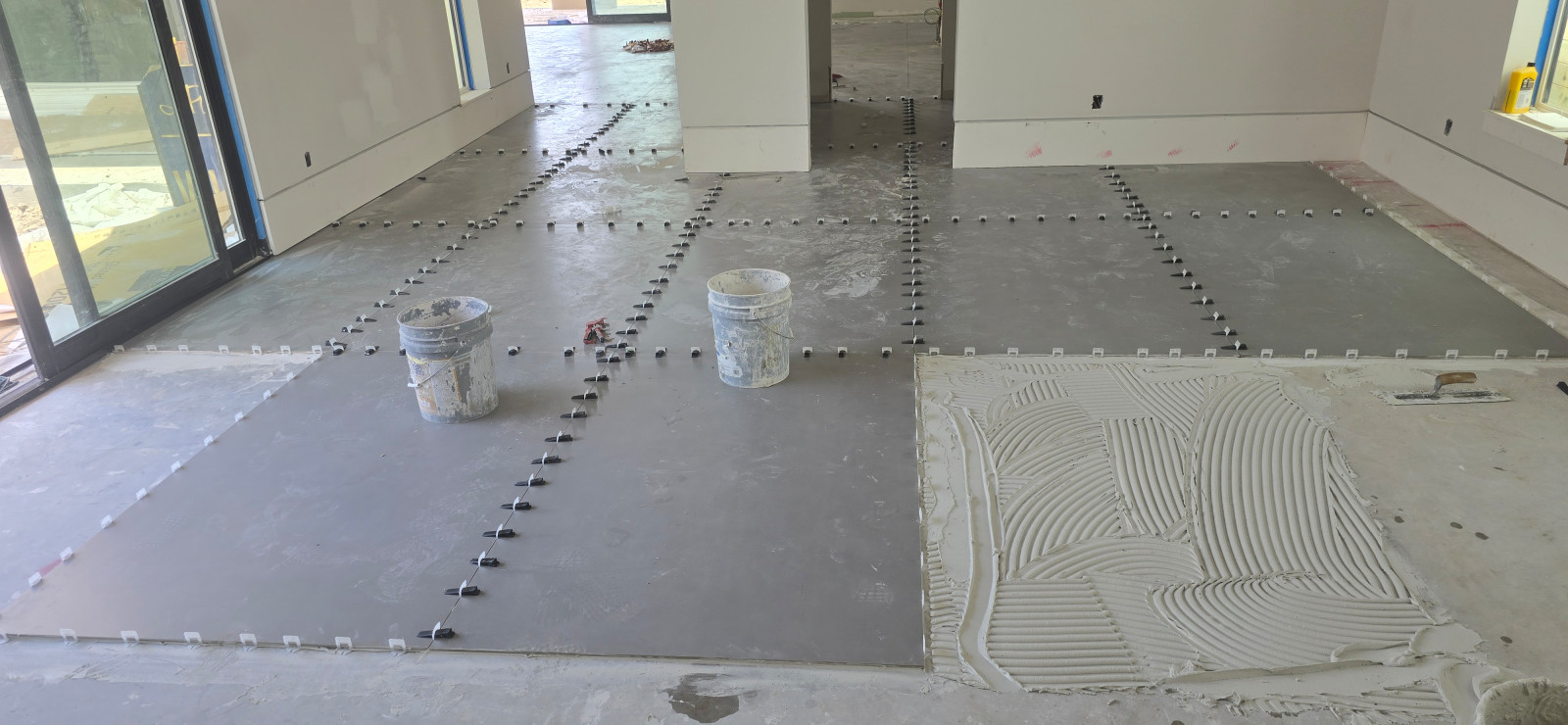
Porcelain tile rather than engineered wood on ground floors. Closed-cell foam or mineral wool rather than fiberglass in low walls. Plywood or marine-grade cabinet boxes rather than particleboard. Paint-grade trim that can be replaced cheaply rather than veneered material that delaminates.
None of this looks like a compromise. It just means the next event is a cleanup rather than a rebuild.
Insurance and permitting
Document everything before demolition — photos, moisture readings, and a written scope. Adjusters pay for what is documented.
Check whether repair costs cross the substantial improvement threshold in a mapped floodplain. Kingwood addresses fall under Harris County and, in places, City of Houston jurisdiction, so confirm which office reviews your permit by address.
Frequently asked questions
- How long should a flooded house dry before rebuilding?
- Until moisture meter readings in the framing are stable and at normal levels — typically one to three weeks with professional drying equipment, longer in humid conditions. Meter readings, not a fixed schedule, should decide it.
- Does flood repair require a permit?
- Structural, electrical, plumbing, and mechanical work does, and floodplain development review applies in mapped zones. If costs exceed 50% of the structure's value, substantial improvement rules require compliance with current elevation standards.
- What flooring is best after a flood?
- Porcelain or ceramic tile on ground floors. It survives inundation, dries out, and does not need replacement after a subsequent event.
Related services and areas
Thinking about a project like this?
Tell us about your space and goals — we'll follow up with a free consultation.
Describe your project