How stamped concrete and pavers compare on cost, cracking, clay-soil movement, heat, maintenance and repairs in the Houston area.
Stamped concrete usually costs less up front and gives a continuous surface, but on Houston's expansive clay it can crack, and cracks are hard to hide or repair. Pavers usually cost more to install, but they flex with soil movement and individual units can be lifted and reset. For most Houston patios on clay, pavers are the lower-risk long-term choice; stamped concrete makes sense when budget matters most and the base and joints are done right.
How each system works
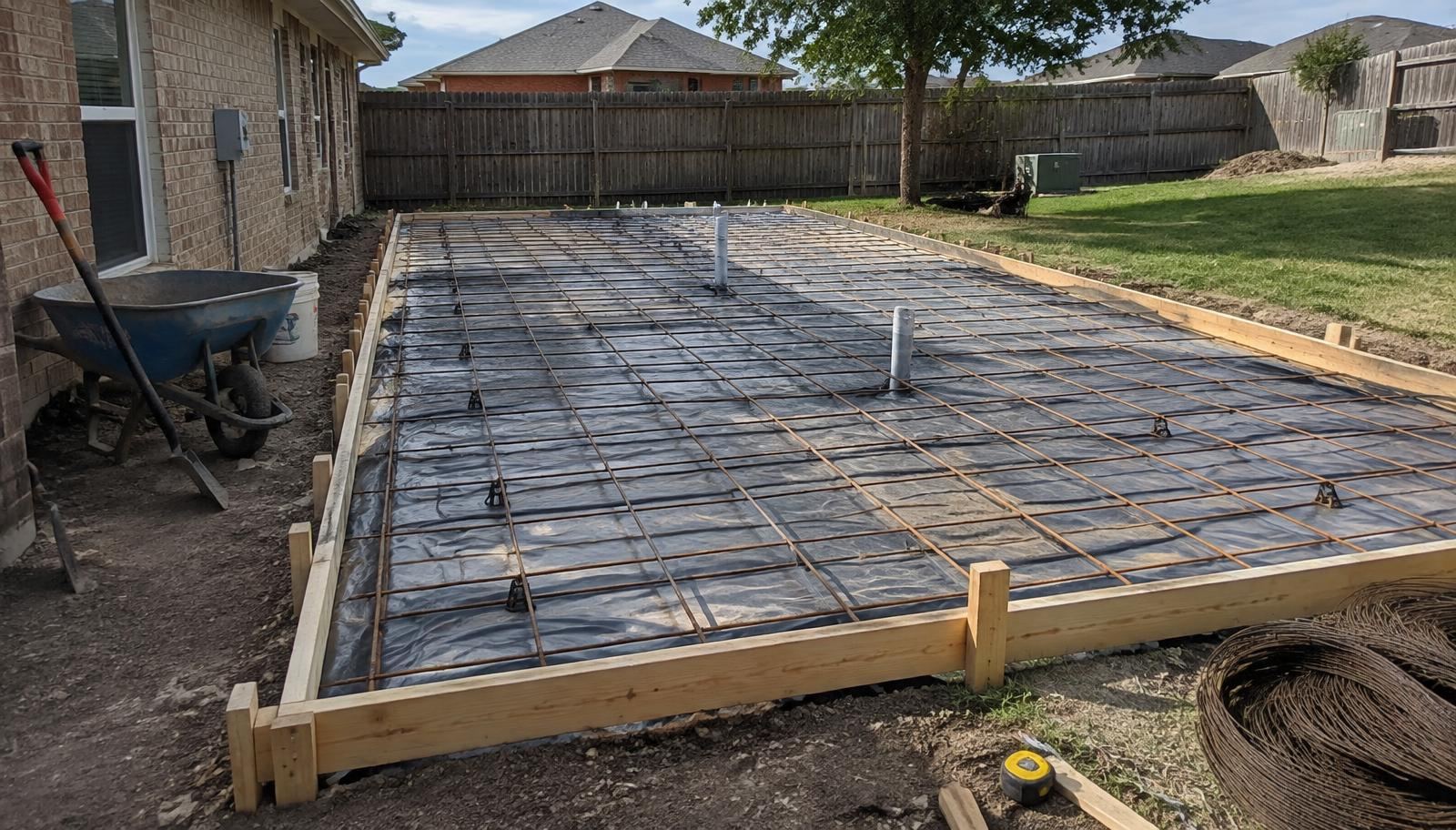
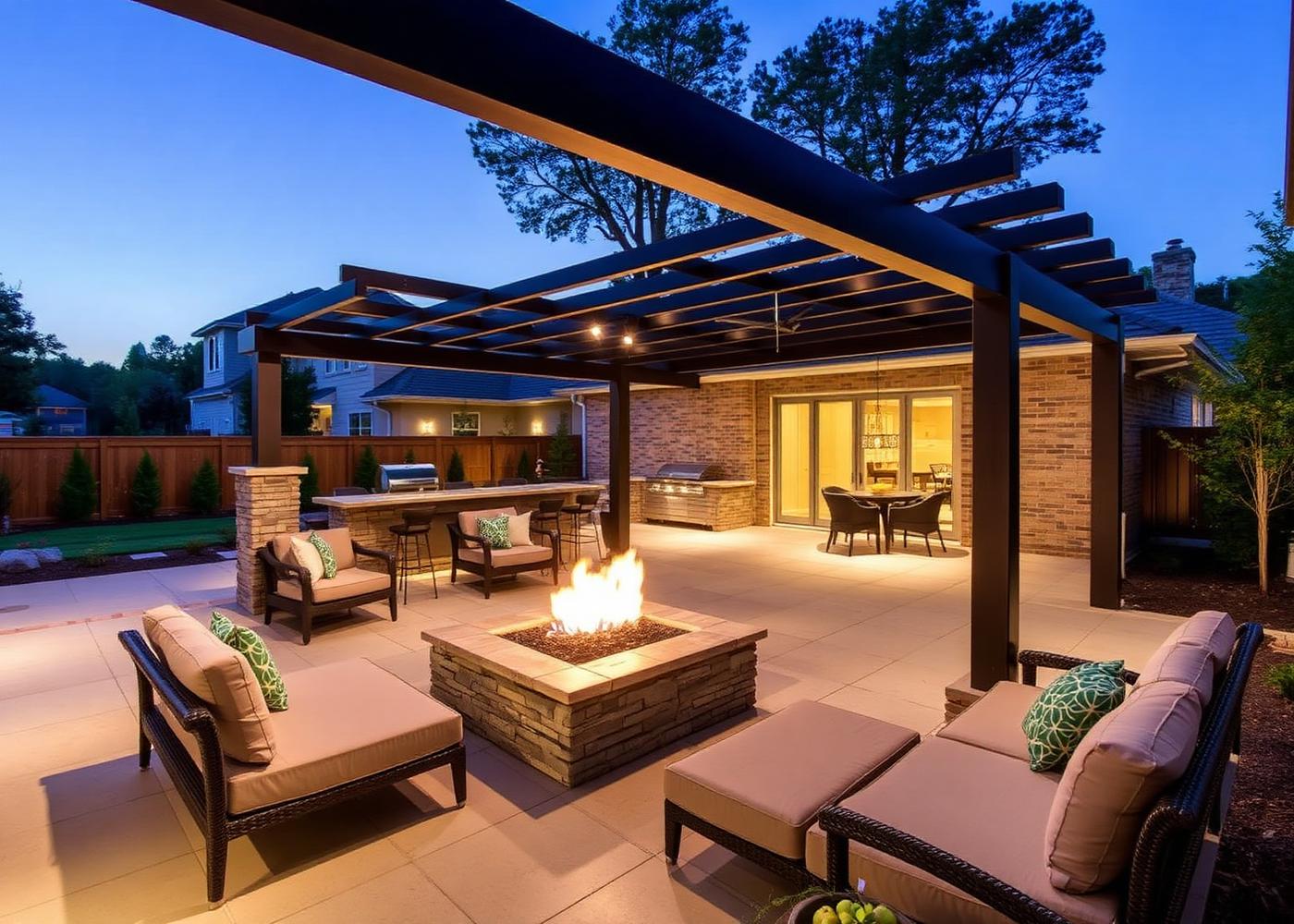
Stamped concrete is a reinforced slab poured in place, colored and pressed with texture mats to look like stone, brick or wood, then sealed.
Pavers are individual concrete, clay or stone units laid on compacted base and bedding sand, locked with edge restraints and joint sand.
Houston clay soil changes the answer
Expansive clay swells when wet and shrinks in drought. A slab resists that movement until it cracks; control joints decide where it cracks. Pavers move slightly as a system instead, and settled areas can be lifted, re-based and reset with the same pavers.
Either way, the base is what matters most: compacted select fill, proper thickness and drainage away from the house.
Maintenance
Stamped concrete needs resealing every few years to keep color and slip resistance. Pavers need occasional joint-sand top-ups and weed control; sealing is optional.
Heat and comfort
Darker colors in both systems get hot in Houston sun. Choose lighter tones for pool decks and patios, and note that sealed stamped concrete can be slippery when wet unless a grit additive is used.
Which to choose
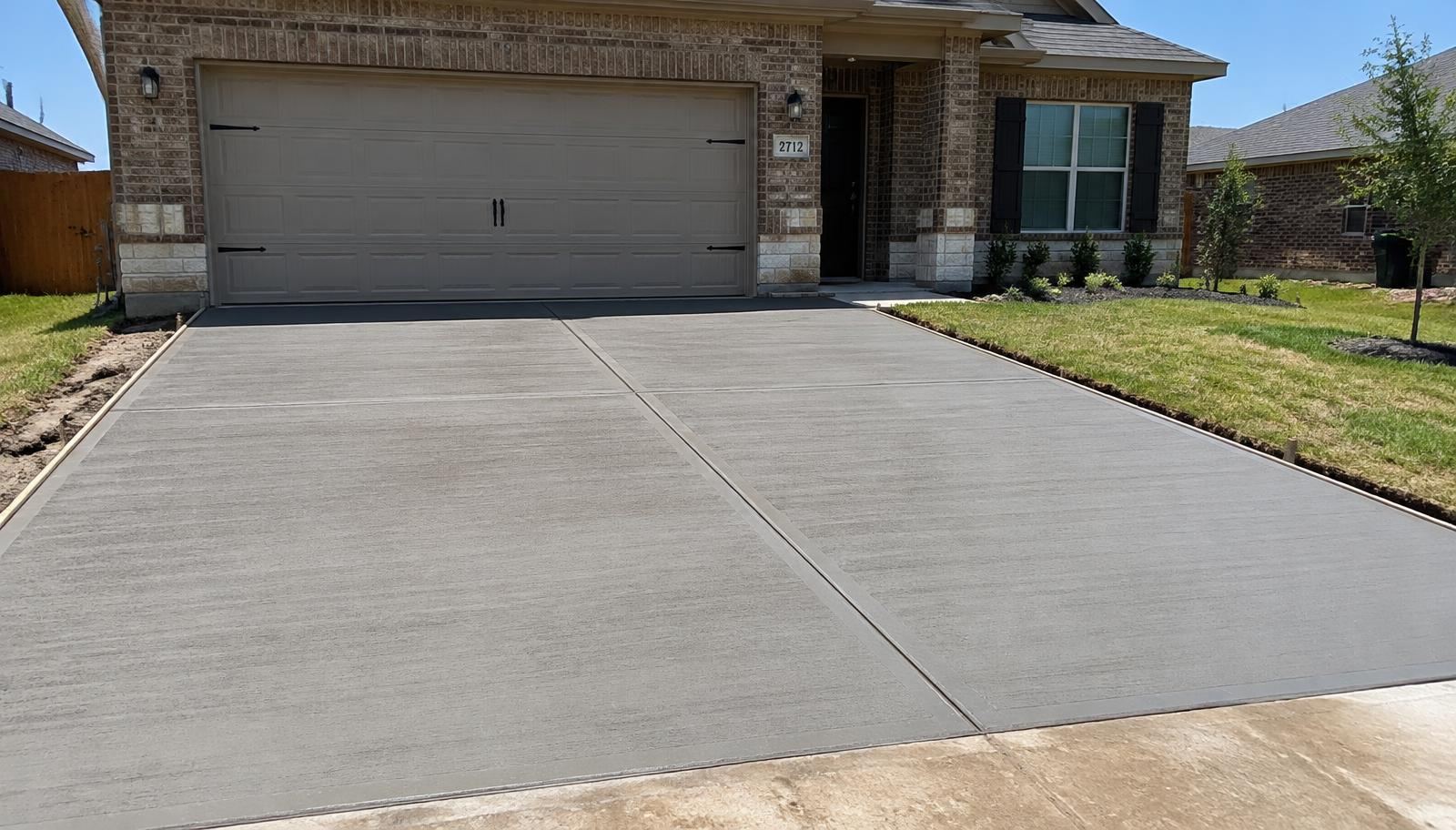
Choose pavers for pool decks, patios on active clay and anywhere you may need to dig later for utilities. Choose stamped concrete for a lower first cost, large continuous areas and a seamless look. For driveways, a properly reinforced broom-finish concrete driveway remains the most common, cost-effective option.
Ready to price your project? Describe it on our project request page or call (281) 889-1068. Novara Construction serves Houston, Katy, Sugar Land, The Woodlands, Cypress, Pearland and Spring, and replies within one business day.
Stamped concrete vs pavers
| Factor | Stamped concrete | Pavers |
|---|---|---|
| Upfront cost | Usually lower | Usually higher |
| Cracking on clay | Likely over time; joints control it | Units flex; no slab cracks |
| Repairs | Patches rarely match | Lift and reset the same units |
| Maintenance | Reseal every few years | Joint sand, optional sealing |
| Look | Seamless | Visible joints, many patterns |
In pictures
Frequently asked questions
- Is stamped concrete cheaper than pavers?
- Usually, at installation. Over the long term, repair costs on clay soil can narrow the gap.
- Do pavers sink in Houston?
- They can if the base is thin or poorly compacted. A proper base and edge restraint prevent most settling, and low spots can be reset.
- How often should stamped concrete be sealed?
- Typically every two to three years, depending on sun exposure and traffic.
- Which is better around a pool?
- Light-colored pavers or textured concrete. Avoid dark colors and slick sealers on pool decks.
Related services and areas
Thinking about a project like this?
Tell us about your space and goals — we'll follow up with a free consultation.
Describe your project