
The 50% substantial improvement rule, elevation certificates, permits, and how to renovate without triggering a full elevation requirement.
If your Houston home sits in a mapped floodplain and the cost of your remodel exceeds 50% of the structure's market value, floodplain rules classify it as a substantial improvement and the home must be brought into compliance with current elevation standards. Below that threshold, you remodel normally with a standard permit. Pull your elevation certificate and the county flood map before you set a budget — the 50% test is the single biggest variable in a floodplain renovation.
Know your flood zone first
Harris County Flood Control District and FEMA flood maps tell you the zone; an elevation certificate tells you where your finished floor sits relative to the base flood elevation. Both are free or inexpensive and both should exist before you design anything.
Zone designations changed for many Houston properties after recent map revisions. A house that was outside the floodplain a decade ago may not be today.
The 50% rule in practice
Substantial improvement is measured as the cost of the work against the market value of the structure — not the land. Jurisdictions typically use the appraisal district's improvement value or an independent appraisal.
If you cross the threshold, the entire structure must meet current standards, which usually means elevating the finished floor above the base flood elevation. That is a fundamentally different project and budget, so it is worth knowing before design begins, not after.
Designing under the threshold
Some homeowners phase work across years to stay below the threshold. Jurisdictions vary in whether they aggregate permits over a rolling period, so confirm the local rule rather than assuming.
Where a project does trigger elevation, the upside is real: a properly elevated home carries dramatically lower flood insurance premiums and is far more resilient in the next event.
Build back better regardless
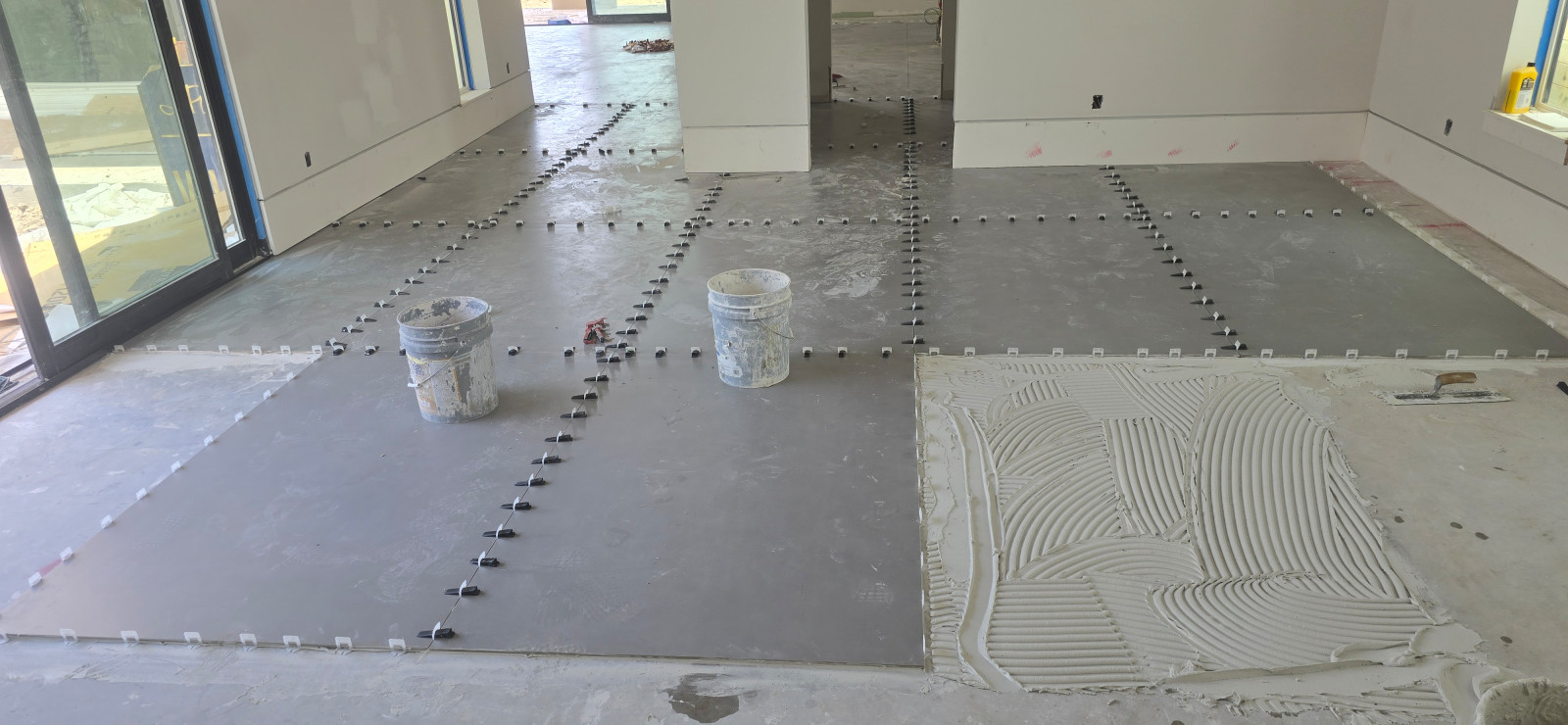
Even below the threshold, flood-resilient choices pay for themselves: closed-cell foam or mineral wool instead of fiberglass in low walls, porcelain tile rather than engineered wood on ground floors, elevated electrical outlets and mechanical equipment, and moisture-tolerant cabinet substrates.
Move the condenser, water heater, and electrical panel above expected flood levels while walls are already open. Doing it later costs several times as much.
Frequently asked questions
- What is the 50% rule in Houston?
- If the cost of improvements or repairs equals or exceeds 50% of the structure's pre-improvement market value, the work is a substantial improvement and the entire structure must be brought up to current floodplain standards, typically including elevation.
- Can I still get a permit in a floodplain?
- Yes. Floodplain development permits are routine. The requirements are stricter and the review adds time, and elevation certificates and engineered drawings are commonly required.
- Does remodeling lower my flood insurance?
- Elevating the structure does, substantially. Cosmetic remodeling does not change the rating; premiums are driven by elevation relative to base flood elevation.
Related services and areas
Thinking about a project like this?
Tell us about your space and goals — we'll follow up with a free consultation.
Describe your project